Industrial Driving Simulation for Professional Driving Schools
Back to HomeClient: Driving School
Role: Lead Software Engineer & Project Manager
Technology: SCANeR Simulation Engine, C++, Python, VR Integration, Arduino, HID firmware, Motion Platform, Hardware-Software Integration
Keywords: Driving Simulation, VR, Car Simulation, Digital Twin, Professional Training, HMI, Force Feedback
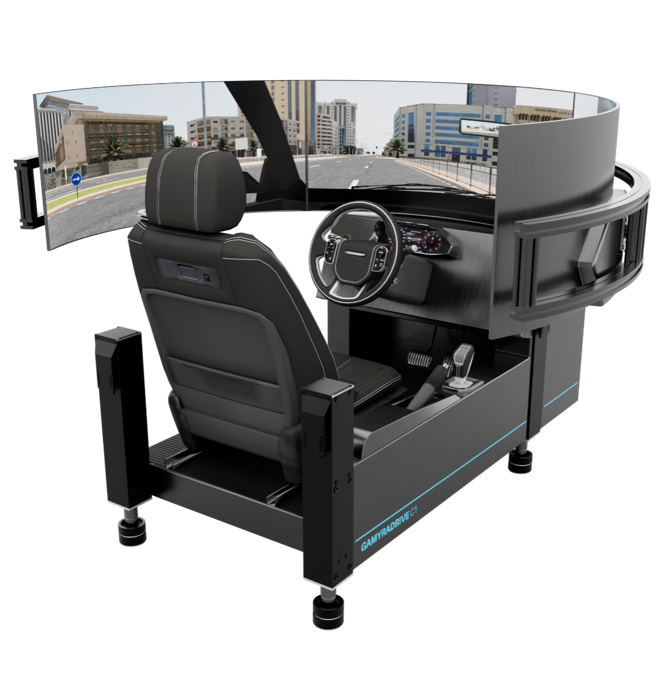
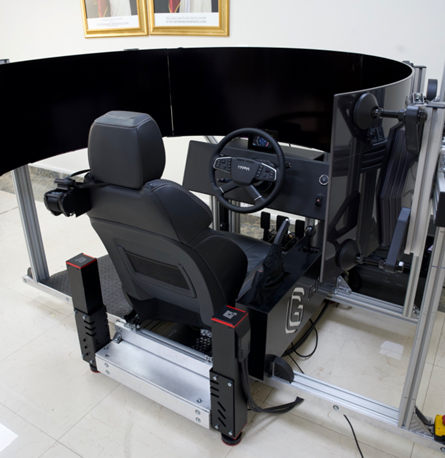
This project involved the end-to-end development of an industrial-grade car simulator tailored for professional driving schools. The system focuses on high-fidelity physics and realistic hardware interaction to provide a reliable training environment for student drivers.
🚀 Key Contributions:
Lead Development & System Integration
Led the development and deployment of the car simulator, ensuring seamless integration across software, hardware, and training requirements for professional driving environments.
HMI & Peripheral Engineering
Engineered and calibrated high-torque (21Nm) force-feedback steering systems, physical dashboards, and multi-display setups to replicate realistic vehicle cockpit experiences.
Motion Systems Integration
Managed the integration and optimization of modular 3-DOF motion platforms, ensuring system stability and responsiveness in high-frequency usage environments.
Cross-System Interoperability
Oversaw the interfacing between simulation software, motion systems, and hardware peripherals, enabling reliable and scalable operation across commercial and educational deployments.
Digital Twin Development
Developed 1:1 scale digital twins of complex urban road networks, enabling consistent, repeatable, and high-fidelity training scenarios for hazard perception and driver assessment.
Advanced Reporting & Analytics
Updated automated reporting systems to detect and log critical driving events—such as red-light violations, collisions, and traffic infractions—providing objective performance metrics.