Advanced MotorBike Simulator for Training & Research
Back to HomeClient: Research Institution
Role: Lead Development Engineer
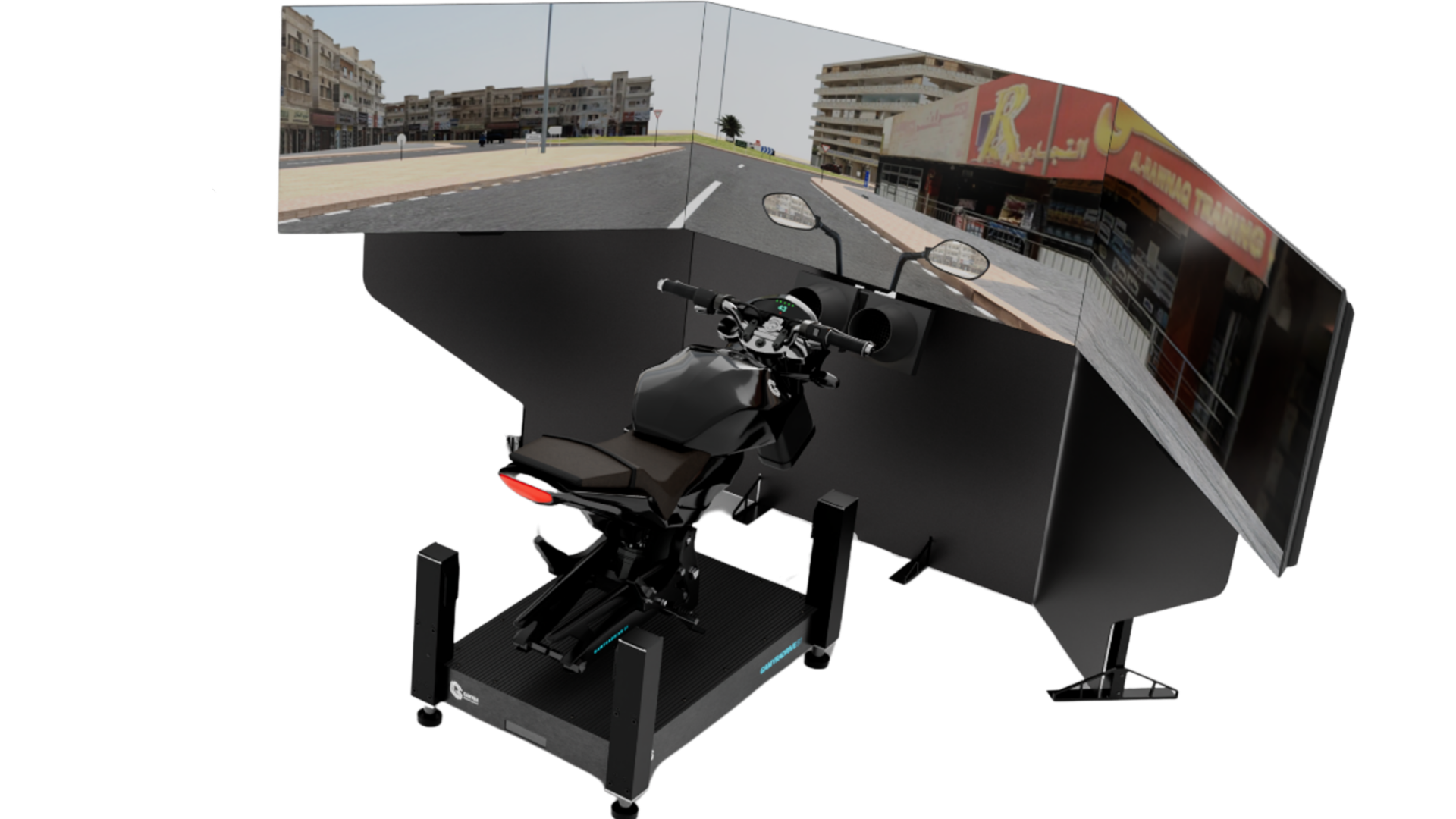
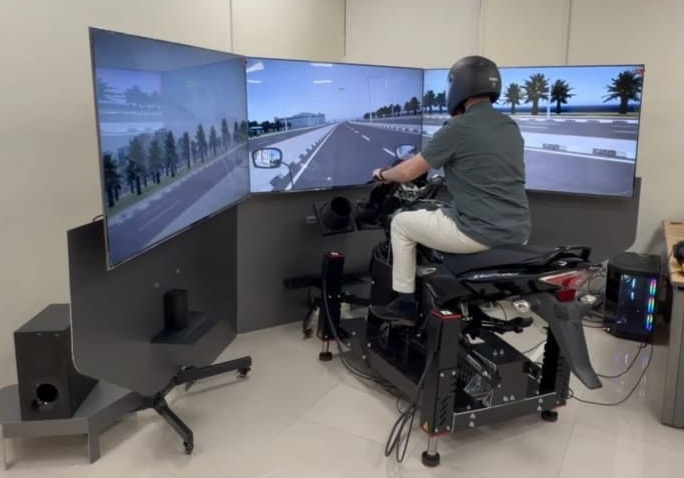
Technology: SCANeR Simulation Engine, Unity 3D, C++, C#, VR (Meta Quest/HTC Vive), HID Firmware, Motion Platform Integration
Keywords: MotorBike Simulation, VR, Digital Twin, Training Systems, Research, Human Factors, Lean Physics
This project focused on developing a high-fidelity motorcycle simulator designed for both rider training and academic research. By combining immersive VR visuals with a physical motorcycle interface and motion feedback, the system provides a realistic environment for studying rider behavior and improving safety skills.
🚀 Key Contributions:
Lead Software Development
Directed the software architecture and development lifecycle, ensuring high-performance execution and reliable communication between the simulation engine and external hardware.
Hardware-in-the-Loop (HiL) Integration
Led the integration of physical motorcycle components (handlebars, throttle, brakes, gear shifter) with the simulation environment using custom HID firmware and signal processing.
VR & Visual Immersion
Optimized the VR rendering pipeline in Unity to ensure low-latency performance, which is critical for preventing motion sickness in high-speed motorcycle simulations.
Motion Control & Feedback
Implemented and tuned motion cueing algorithms for a 2-DOF/3-DOF platform to replicate lean angles and longitudinal forces, enhancing the user's sense of presence and vehicle dynamics.
Research Tools & Data Logging
Developed custom data acquisition modules to log rider inputs and vehicle states at high frequencies, providing researchers with detailed metrics for human factors analysis.
Digital Environment Creation
Oversaw the creation of detailed urban and rural digital twins, featuring dynamic traffic AI and variable weather conditions to test riders in diverse, high-risk scenarios.